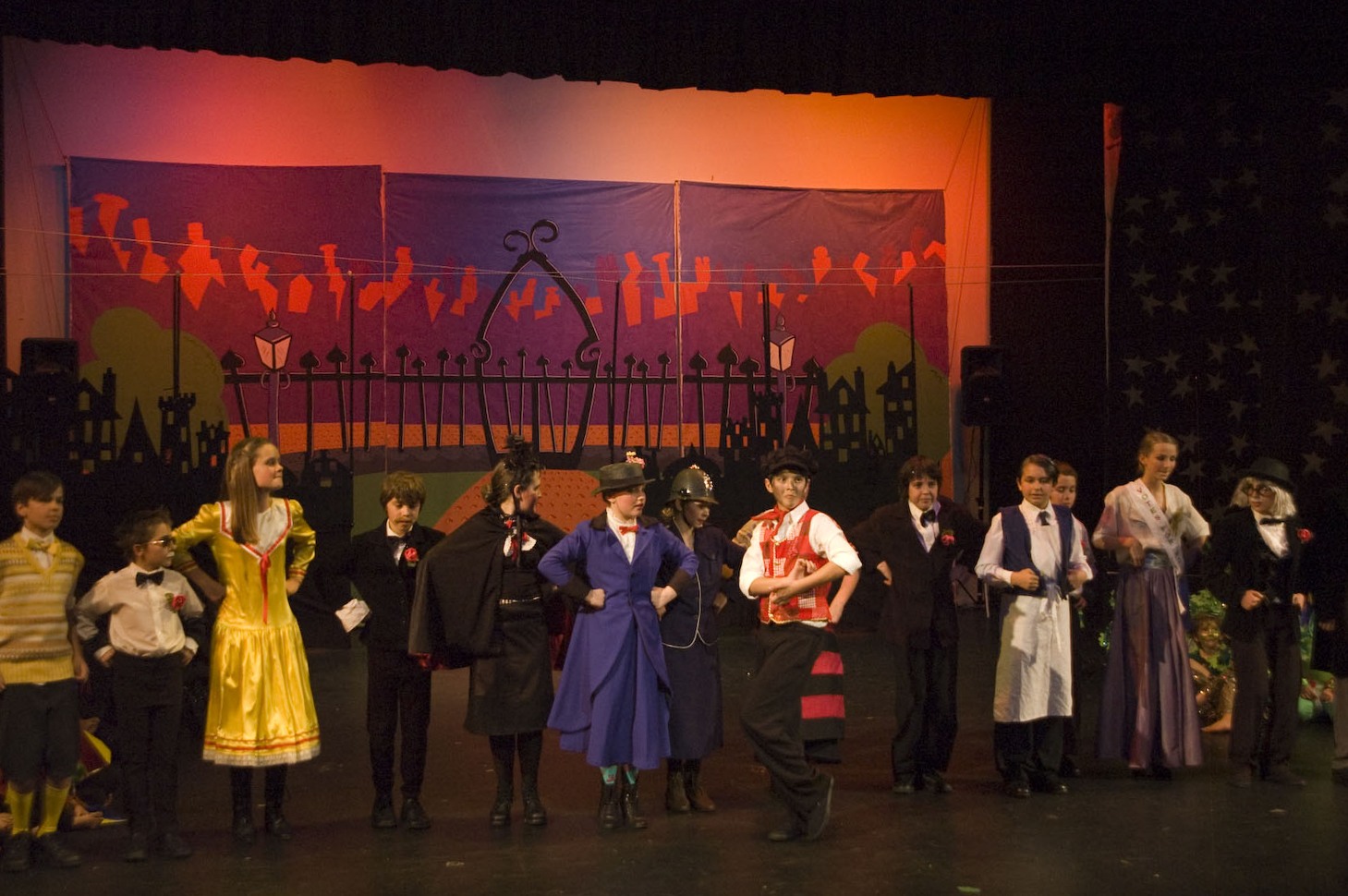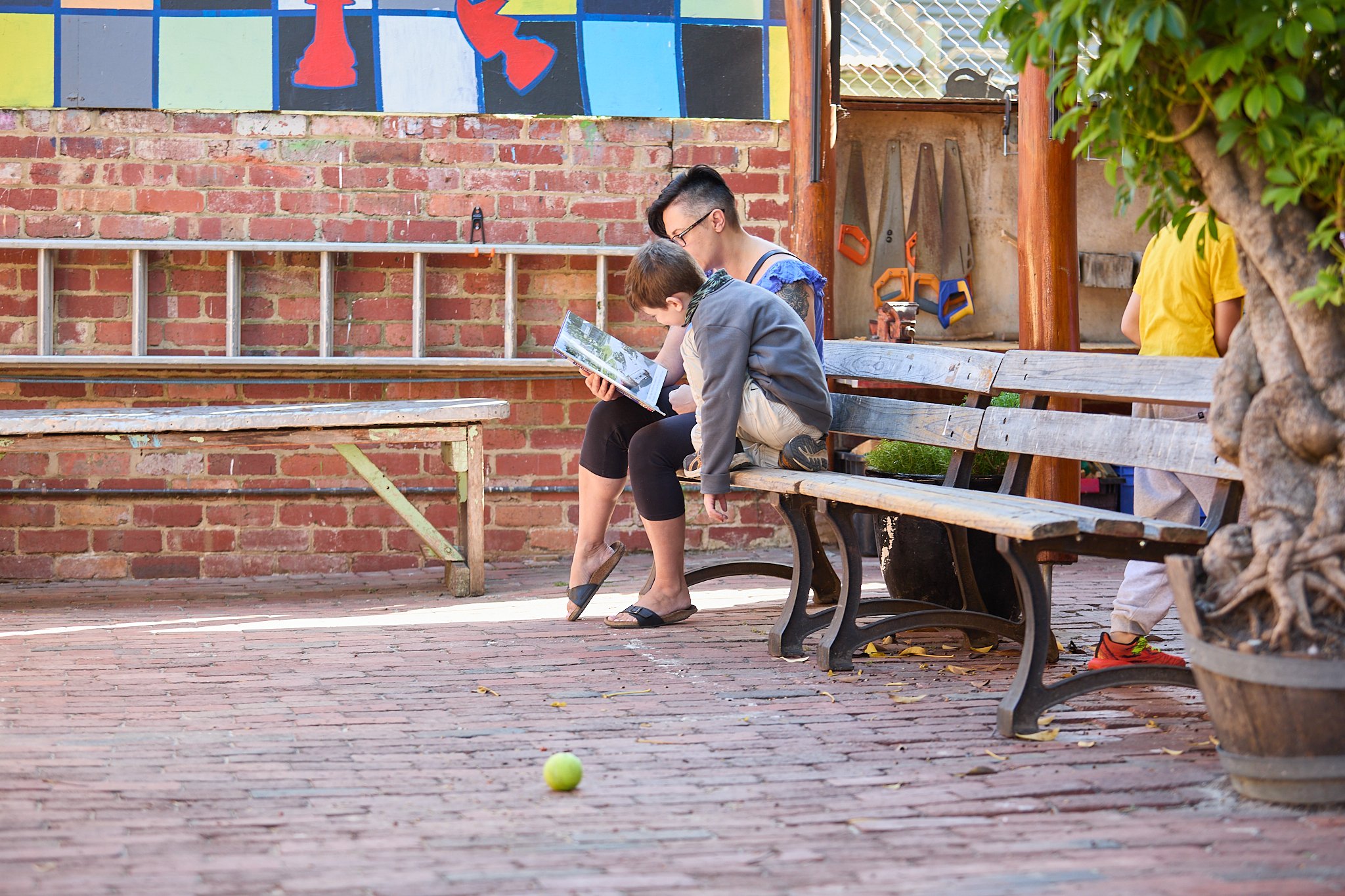
The school was founded to further children's communication skills and self-confidence. The structure of the day and arrangement of the curriculum aims to foster these traits.
Curious about how we approach this?
The curriculum areas documented below share our approach to our programs. We’ve also included a brief video explanation on our academic program.
The subject content at FCS covers a rich spectrum of the theoretical and practical, from ethics to catching and observing water beetles. The small nature of the school and classes make it possible to pursue the passions of both the teachers and their students.
The English and Maths programs are both highly structured and flexible - as is the teaching style. These programs (known as the Fitzroy Reading and Maths Programs) have world class reputations, but our school is much more than these. The fun adventure that is our school week includes drama and science, music and outings, dancing and spelling, stories and art and nature walks and sport. And of course, our many, many camps.
Visitors from far and wide without fail comment on the richness of the FCS experience, and how lucky the children at our school are.

The sharing of great stories and time-honoured literature is part of nurturing the development of a well-rounded human being. The English curriculum at FCS recognises the enormous power that literature has to instruct. Large numbers of stories are read to and discussed with children in every year level. In the English classroom, works of great writers and poets are explored and studied. Within these works, a vast range of human emotions is illuminated and, in some way, experienced. Through others’ writings, students bring to consciousness their own aesthetic life, and share, for example, in the miracle of the little flower that bursts through the crack in a concrete slab. Literature gives students permission to have feelings and to make judgements about the world; it equips them to express their own opinions. Without a teacher needing to preach, literature advances values and behaviours such as sensitivity, alertness, kindness, compassion and fairness; it provides a pathway to empathy, a trait which makes us truly human.
Poetry is also central to our curriculum. The children are engaged in looking at a wide variety of poems, in memorising and reciting favourites and in writing their own. We recognise Shelley’s observation that ‘Poetry lifts the veil from the hidden beauty of the world, and makes familiar objects be as if they were not familiar’ as especially relevant to children.
An important aspect of sharing imaginative and insightful creations is respect. Our classrooms and school culture allow for genuine engagement with emotion and empathy, and the appreciation of beauty, wonder, reflection, and creativity. We are blessed to have a number of teachers who feel safe to cry when they are touched by a story they are reading to the children. This openheartedness allows for an open and empathetic engagement with literature, and we constantly strive to have a school culture where gentleness is embraced and celebrated.
We consider literacy to be an essential skill which permeates almost every aspect of our 21st century lives. Within the context of our rich language and literature learning environment, our literacy program is the cornerstone of our English program. Fitzroy Community School is well known for its longstanding use of a systematic synthetic phonics methodology to teach reading and writing. The Fitzroy Readers and associated literacy teaching resources, developed by the school’s founders, Faye Berryman & Philip O’Carroll, have underpinned literacy education at FCS for five decades. It is pleasing to us that so many other schools are now also embracing this form of literacy instruction. Our systematic, sequential literacy program teaches the links between the sounds of spoken language and the letters of written language. The wonder and magic of language and literacy are embedded in our classrooms from day one. The children are rightly amazed to learn that any book from the library shelf only uses the 26 letters of the alphabet, to learn that these letters are arranged in various ways. This is the magic – that with only 26 letters we can have the riches of our English language. Imparting this wonder from the beginning has the students excited to learn.
Teaching the skill of writing includes exposure to a wide range of texts as well as the fundamentals of good sentence construction, grammar, spelling and punctuation. We spend considerable amounts of time engaging our students in the development of these skills. There is explicit teaching of the parts of speech (nouns, adjectives, verbs, etc) and punctuation (full stops, commas, capitalisation etc) as these are essential tools in the writer’s toolkit, helping to create clarity and convey intended meanings. Through classroom writing exercises, the children learn that harnessing their skills in grammar, spelling and punctuation allows them to share their creative ideas with others.
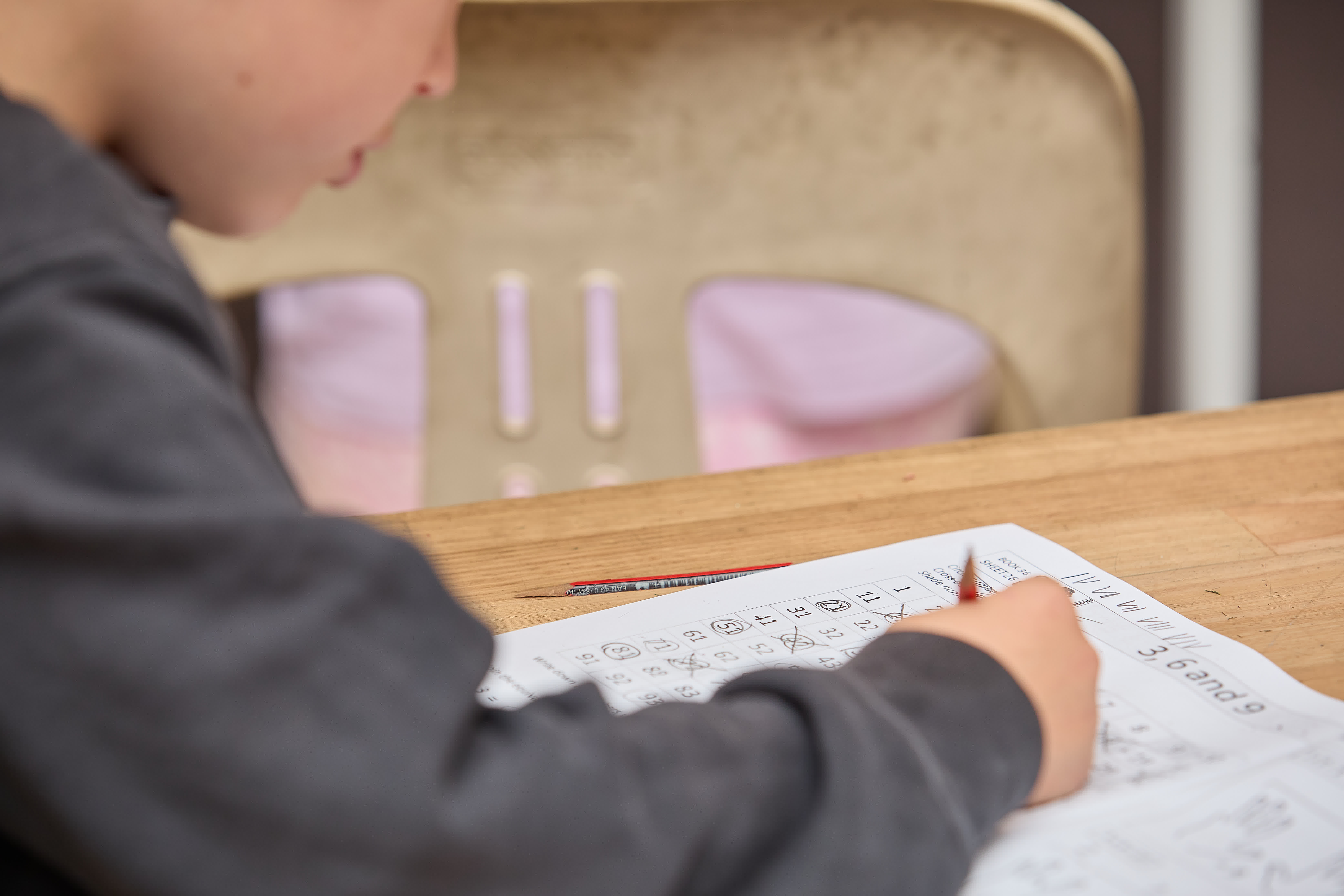
The mathematics program has three main foci. The first of these is the development of each student’s personal responsibility for their progress in maths. The second is mathematical confidence, which is built upon a strong foundation in all basic operations. The third area focuses on operationalising mathematical skills and knowledge in active problem solving.
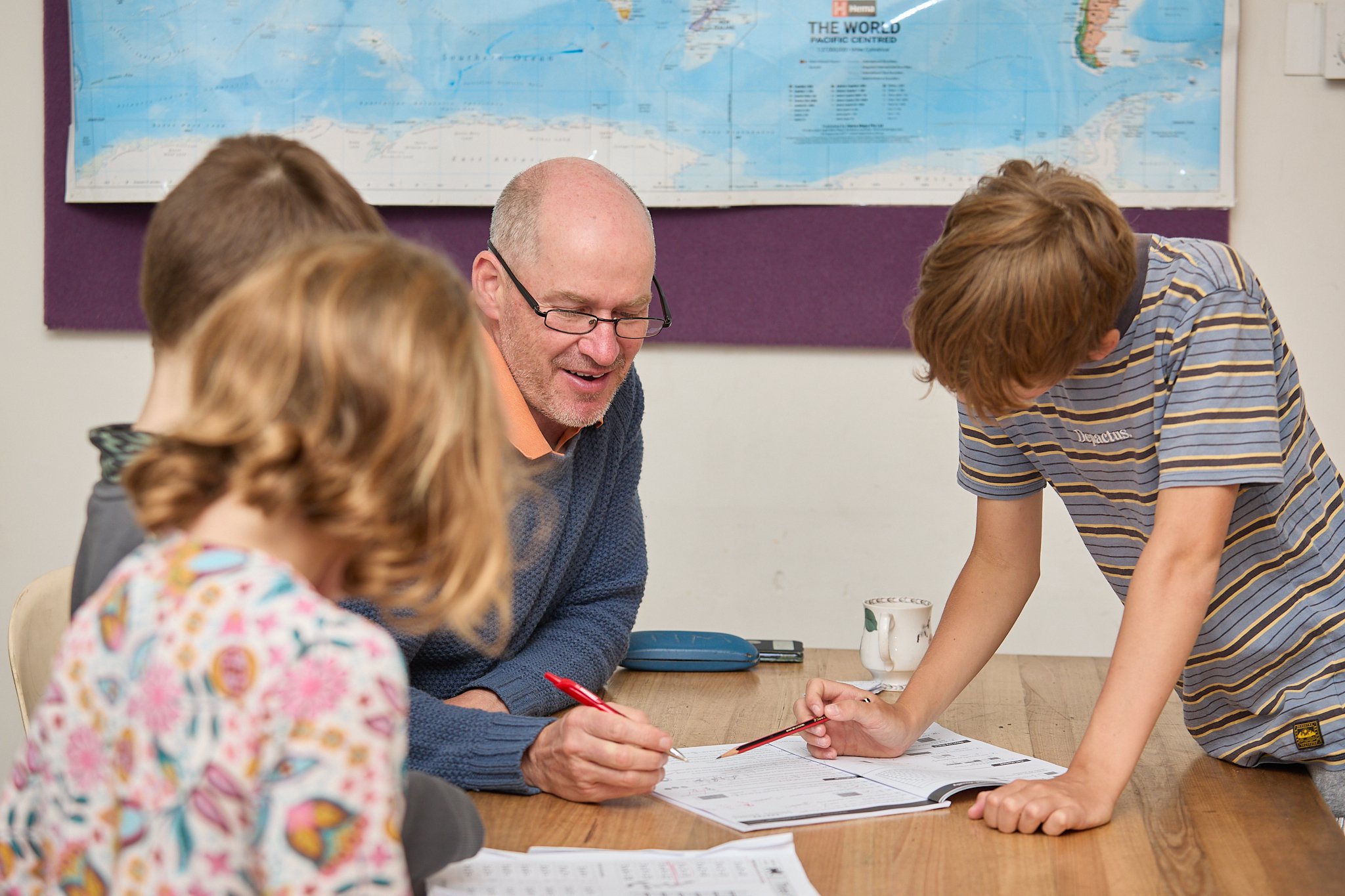
Mathematical competency is developed along two pathways: through independently paced and through teacher-led learning. Over many years, the school has developed a carefully sequenced set of maths booklets which stress mastery. Students work through these books independently, and importantly, at their own pace, under the supervision and guidance of FCS’s teachers. In mixed-age classes, it is common for older students to provide assistance to their younger peers, which enhances the maths learning of both children. Our maths program develops students’ mathematical skills in small incremental steps, which ensures students acquire a strong sense of confidence in their mathematical acumen. Successfully completing a maths book and moving on to the next challenge provides a clear source of motivation to our students, which helps to spur children on with their maths learning.
Operating in tandem with this individually paced work, is the direct, teacher-led instruction in maths processes, strategies and concepts. These lessons are predominantly delivered in our year level classes (not in mixed-age classes). In these lessons teachers usually focus on a single concept or skill and carefully work through a sequence of tasks and problems that support its development. Once the teacher feels that the concepts and strategies have been understood and are able to be reproduced, the students are then given problems relating to this new concept, and where necessary, a review of previous concepts or skills is undertaken. All students intermittently review skills and concepts to consolidate their learning and build mastery and confidence.
As noted above, the school has developed a series of sequential mathematics books that cover all areas of the primary school mathematics curriculum. This program, in addition to the explicit teaching of mathematical concepts and strategies, has seen our students develop confidence in their mathematical abilities and continuously achieve results above expected levels.
The final focus of our program is on the development of the fundamentals required for success in secondary school mathematics. From an early age, students work on the instant recall of number facts. We aim for the automatic recall of these facts so that students can easily progress to the study of introductory algebra and geometry. This enables us to dedicate additional time to complex problem-solving, and typically sees our students well-advanced mathematically at the completion of their primary schooling.
One of the joys of teaching mathematics is that our students enjoy gaining mathematical competency. The mix of direct instruction and personalised learning at our school has led to our students having a confident approach to mathematics, key to making it valued and appreciated subject.
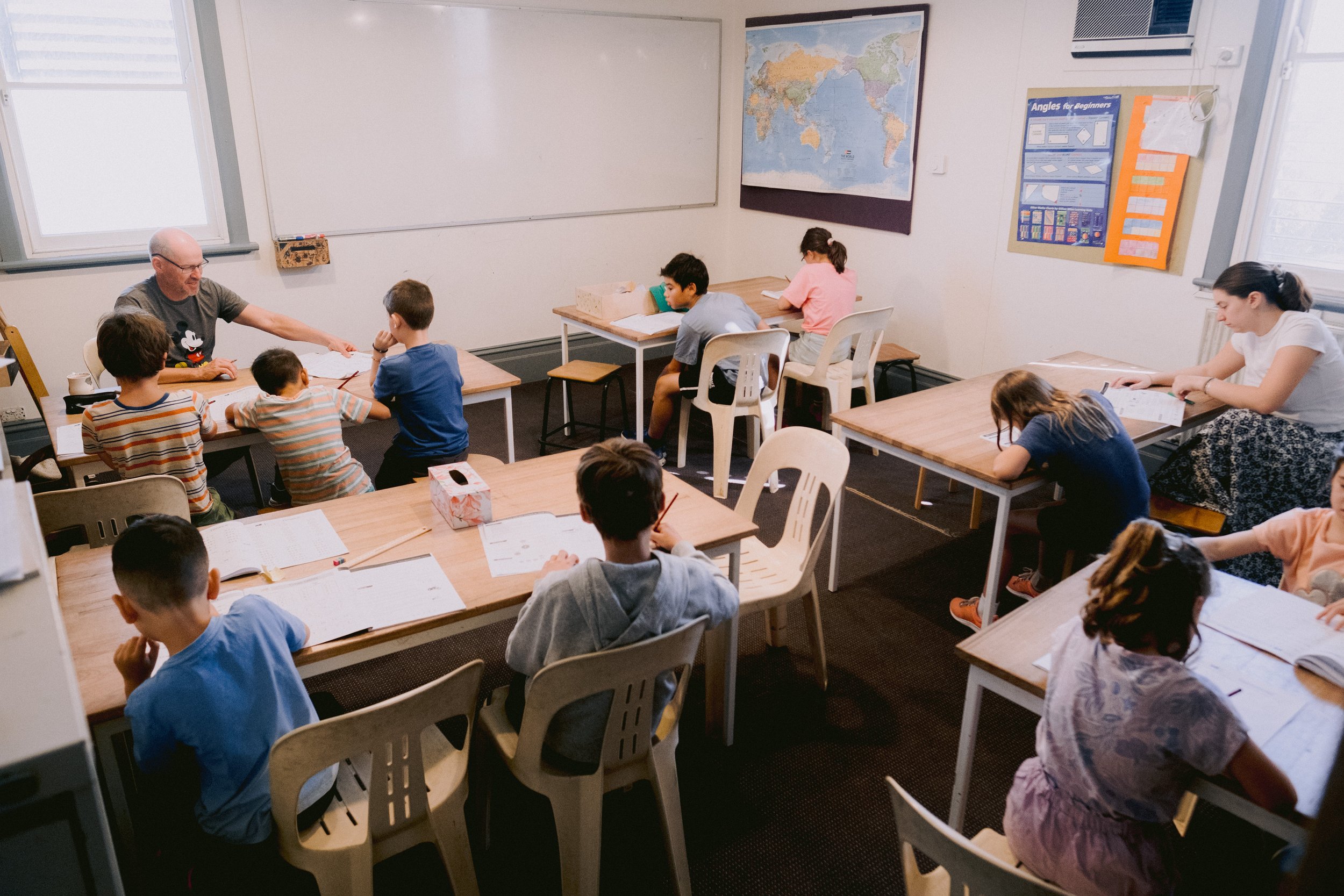
Science is an exciting journey through our wild and wonderful world. Classes are a mix of theory, practice and experimentation. Our students are encouraged in explore and question, to engage critically and encouraged to use questioning as a tool for a greater understanding. Hands on lesson activities define our science program, with experimentation and model making used to test ideas. A discovery mode of practice is embedded in our approach to science, which when combined with a clear encouragement to explore and question moves science skills out of the classroom and into the realm of skills-knowledge that students apply to many facets of their lives.
Our curriculum is greatly enhanced through engaging in the skill set of our school families. We regularly engage with Biologists, Zoologists, Chemical Engineers, Marine Biologists, and range of medical professionals who greatly enrich the classroom experience and our student’s knowledge in many areas. Our overall approach to offering an enriching school experience aligns with our approach to science, and so our curriculum often takes us out of the classroom and into the world.
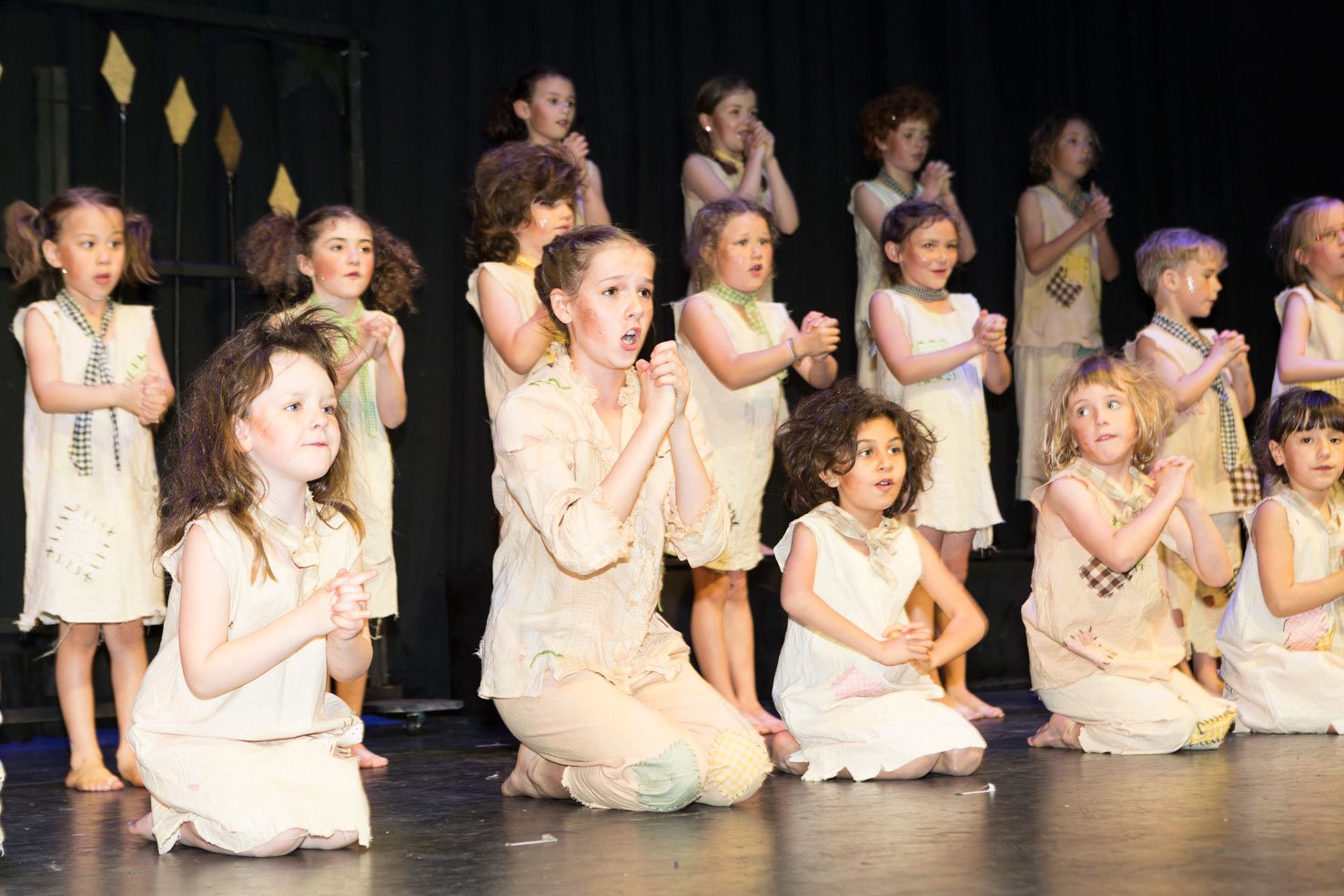
Drama offers a chance to play, imagine, create and explore.
Dramatic activity is a natural part of children’s lives; even before starting school they start to engage in various forms of make-believe play. Children love to move, imagine, and interact with others, and in drama classes this is what they do. Our classes witness the development of creativity, teamwork, negotiation, self-confidence, empathy, communication, and leadership.
Drama classes include a wide range of experiences: dramatic play, improvisation, role-play, test interpretation and theatrical performance, structured around movement, speaking, and responding to one another. In Drama, characters, ideas, stories and other worlds come into being.
Drama builds – in a rewarding and engaging way – teamwork. The collective project can only be realised when the class learns to work cohesively, supporting the development of negotiation and listening skills. Differences must be resolved, and compromises made to achieve a meeting in the middle, actively contributing to the cultivation of social competencies and confidence in students.
Innate to Drama is the ability to express different points of view, while learning that others often have a different understanding or interpretation to our own. In the production of stories and scripts, Drama assists in growing literacy skills through extending vocabulary, as well as writing and reading competencies.
Drama, through the creation, exploration and production of stories provides a non-stressful and non-confronting means for students to develop a sense of their own identity, and to explore meaningful (and challenging) situations that have real world parallels.
Most importantly, it’s really fun!
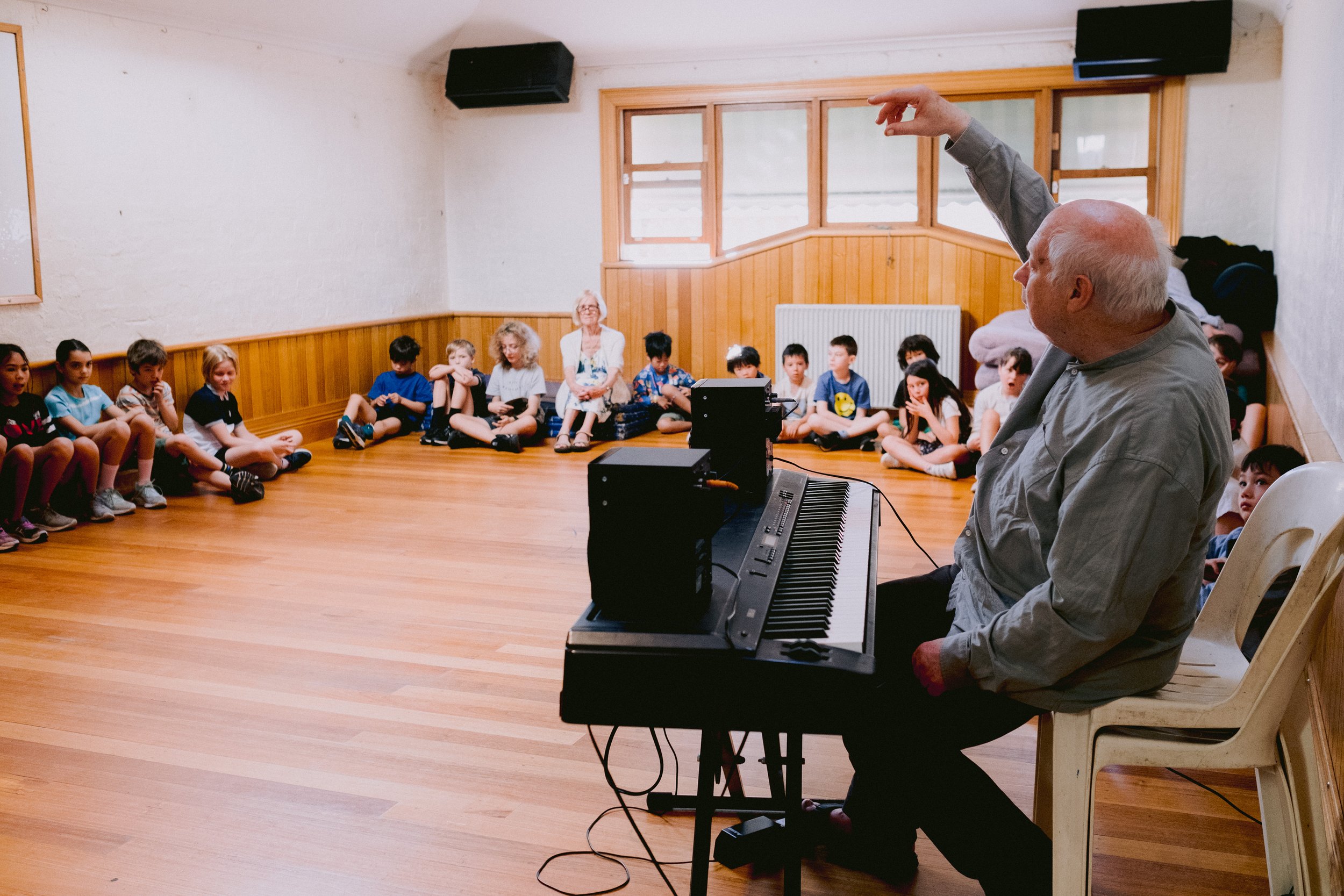
Music class has a strong emphasis on singing and movement. Using a combination of games, activities and rehearsed repertoire, classes are an experience of lively energy. A variety of folk songs and original compositions are used to develop rhythmic awareness and vocal confidence. Elements of the Kodaly and Dalcroze approach to music pedagogy have been fine tuned to suit our class structure of small mixed age groups.
Younger groups build foundational skills with lots of short, simple songs and rhymes. Musical games are another frequent feature of class. Older students build on these foundations with additional listening activities and more complex active games – often involving lots of chasing and laughter.
Activities are devised to encourage a joyful experience of music. Musicianship skills are developed through both singing and listening. Listening activities form the basis for small group creative tasks, with the pieces chosen showcasing classic, traditional and modern repertoires.
Each week also includes a whole school choir session, to which parents and preschoolers are welcome. The end of term concert allows for a showcasing of the music program and offers the children an occasion to perform.
There are also regular soirees which offer the children an opportunity to perform, with soirees stressing participation and progress; while also offering the younger ones the opportunity to witness the development of skill that comes from regular practice.
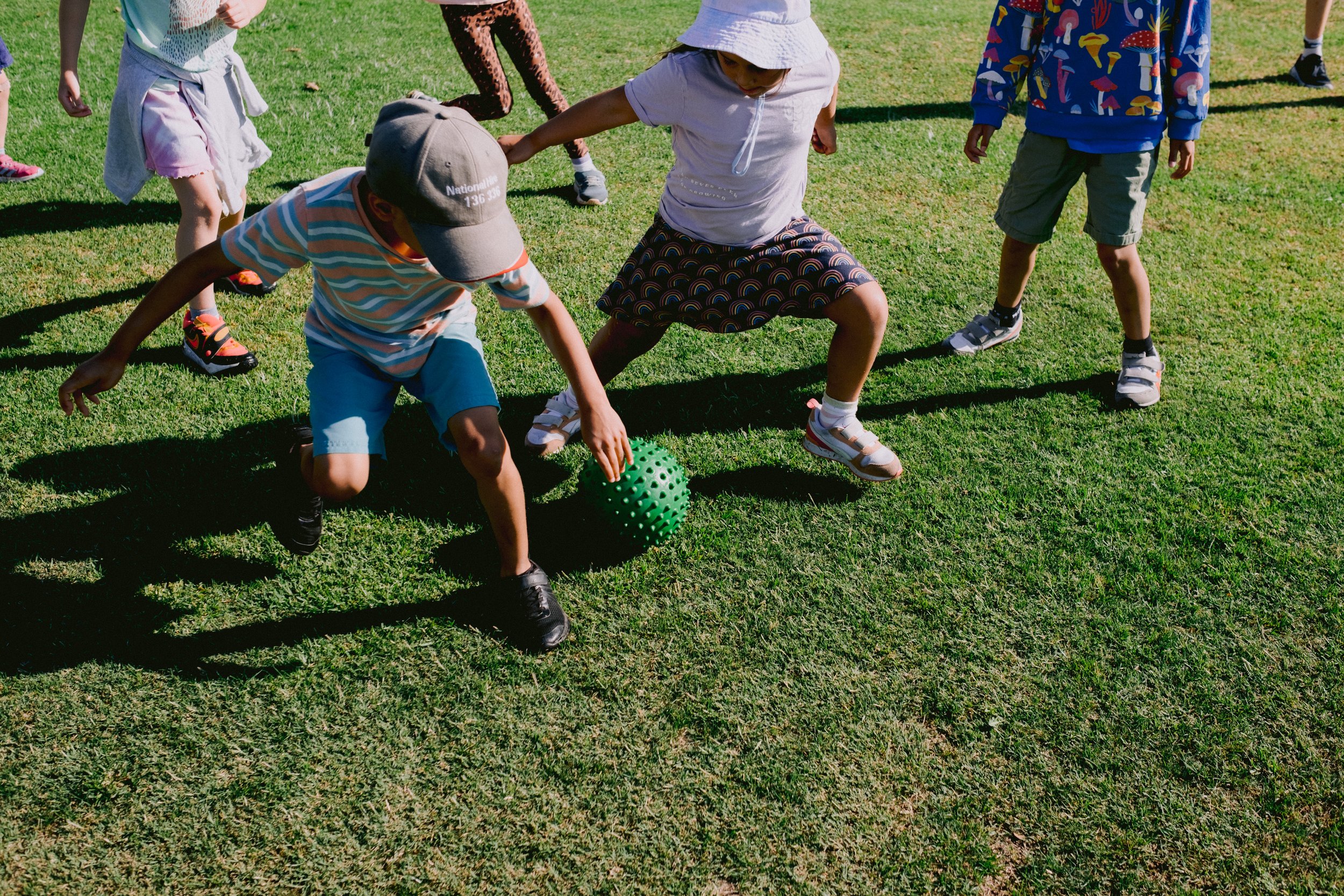
Sport is an integral part of the FCS experience, reflected in it being the most timetabled activity. This prioritising of Sport goes beyond the clear physical gains: fitness, flexibility, hand-eye coordination and ball-skills. Although, given the amount of time spent on sport, these are all fairly well developed in our students. FCS’s commitment to sport resides in its contribution to the goal of raising of children who are good sports.
Sport classes involve a range of games, both formal in informal. In some classes, the intention is to have some silly fun, while at other times the class may focus on a specific skills or the learning of the rules of a game. Sportsmanship is always a priority, achieved in tandem to the children gaining fitness, flexibility and coordination.
Our experience is that Sport classes offer a real, fun and easily accessible format in which children may acquire and practice character traits. Sport provides a genuine setting in which attributes of character and interpersonal skills are readily developed. Teamwork, effort, overcoming adversity, persistence and the ability to be a good winner (and loser) are readily experienced and practiced on the sporting field. These are important life skills: not giving up when things are (feel) tough and the game (your situation) is going against you are qualities that will certainly be needed in the adult world. Likewise, life will certainly throw up circumstances where continuing to support your team (family, friend or workmate) in the face of difficulties and setbacks is a much needed (and appreciated) quality.
The sporting field is a child-appropriate introduction to tackling and overcoming challenges: the weather will sometimes be far from optimum (wet and muddy or hot and sweaty), a skilful teammate absent and you’ve just been tackled to the ground. The ability to remain positive, get up and continue is part and parcel of sporting endeavours.
Sport also plays significant dividends in the classroom in terms of focus and application, something that has become more important in recent years as children’s homelives have become more sedentary and increasingly screen-based. A large Spanish study of early secondary school students with ADHD found their school’s incorporation of a daily run led to a dramatic impact reduction of symptomology . The FCS experience mirrors this finding. Our experience is that a decent proportion of primary school age children have a notable energy supply, and so are much more able to concentrate and remain on task when they’ve burnt some of it off. Sport, as a frequent endeavour at FCS, in addition to increasing fitness and building character traits, also promotes focused, efficient classrooms. Children are simply better able to concentrate on academic work after they’ve been out for a run on the oval.
Sport, like all classes at FCS, is run in different age configurations: like-age and mixed-age groupings. When the grouping is older like-age students, the focus is generally on the acquisition of specific skills and the learning of the rule of a specific game: basketball, netball, swimming, rounders and soccer are school staples.
FCS is also involved in inter-school cross-country running, with Middlies and Biggies being taken for regular runs over a number of weeks in preparation for the race. The school, despite its small size, regularly sees a number of highly placed runners, with progression to Division, Regional and even State competitions a yearly phenomenon. The ‘overrepresentation’ of our students in these competitions reflects our students ‘have a go’ disposition and general persistence. That is, while there is no question as to whether the children will be puffed out in these races, what sets the FCS student apart is their continuing to push themselves when short of breath. Our observation of many other schools doing cross-country would seem to indicate that slacking off is the norm, and having a go the exception. This is a sad state of affairs for both the individuals involved and our society more broadly.
In all games, our children are expected to participate and try their best. The small size of our school means that every child gets to play and contribute in a way that is not so readily available to a student in a larger school. All children from years three to six regularly represent their school in interschool sport, reflecting the FCS ethos of active, positive participation.
This ethos of full, active participation is something of a conceptual challenge to many children who join our school part-way through their primary years, who appear to have adopted an ‘optout’ and ‘I don’t/can’t’ self-concept. The high-spirited, cheerful nature of our sports classes sees these students, over time, letting go of these negative mindsets and starting to enjoy the fun of active participation.
Our mixed-age (vertically arranged) sports classes prioritise games that are fun for all ages and where effort counts for more than acquired skill. Mixed-age classes regularly see the older children given the dual role of participant and teacher/supporter of the younger children. The endearing aspect of these games ‘captained’ by the older children is the premium they place on inclusion. From time to time the older children are given the responsibility to select, organise and run the game or activity.
It is always pleasing to see the younger children's excitement when they win a race for the first time or tag an older child who they’ve put considerable effort into chasing and catching. Our experience is that social competencies are accelerated in these mixed-age classes, as they naturally lend themselves to the emergence of leadership, teamwork and sportsmanship.
Teamwork is magnified in mixed-age groupings as the younger children are happy to cooperate with, and follow, the instructions and example of the older children. Likewise, the positive manner in which the older students respond to wins and loses demonstrates, and so teaches, sportsmanship. Mixed-age classes have also been noted by the sport staff to contribute to a more mature and conciliatory experience. Our thoughts here are that it is socially inappropriate for a twelve-year-old to either gloat or complain when there are five-year-olds involved in the game, while the younger children are less inclined to whinge or sook in front of the older children. Mixed-age classes appear to bring out the best in all.
In returning to the question of fitness, an oft heard comment of new students offers an insight. Newbies frequently sharing that their legs are tired at the end of the day. We take that as a badge of success.

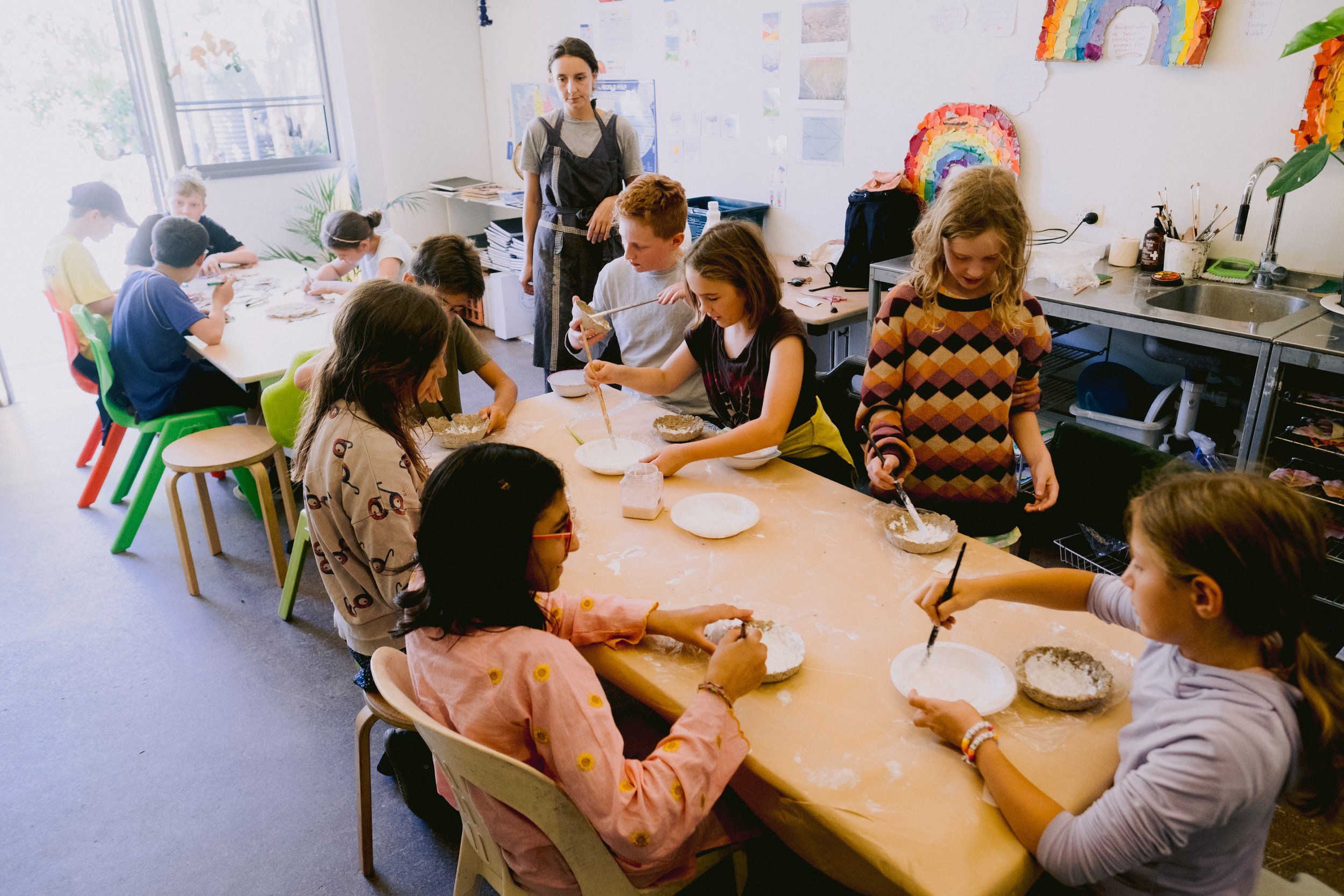
In art we learn about the knowledge and skills of a wide and eclectic range of artists, from classic impressionist to modern day street artists, as well as a smattering of local artists. These studies are used to inspire students’ own creativity and to encourage imagination and individuality in every project. Our students are offered a wide range of creative and artistic opportunities, contributing to Art being a much-loved subject and an endeavour in which the children thrive.
Art allows a meaningful yet non-confronting way to express feelings, take risks, have fun and simply relax. In our art classes, important conversations frequently occur in parallel to artistic creativity. Our experience is that art is a great leveller, with no student excelling in every medium, and in fact, depending on the medium, the teacher may themselves also be experimenting and developing skills. This is something that all students appreciate as it gives them permission to have a go themselves. In experimenting with new ideas, techniques and styles, art helps develop creativity, patience and humility – our ‘masterpieces’ don’t always turn out as envisaged!
Our school has been blessed to be associated with highly gifted artistic staff and parents. We regularly celebrate the wide variety of art produced by these artists and attend exhibitions and workshops presented by them. The art program at our school is enhanced through our engagement with the wider artistic community.
Students love visiting local galleries and museums to appreciate art in person. There is so much happening in Melbourne, and we are happy to take advantage of the many offerings.
Our art program incorporates the use of a wide range of mediums: ink, paint, pencils, brushes, paper, charcoal, screen printing and linography. Our artistic creations also use a range of recycled materials.
A pleasing aspect of our art program is the peripheral conversations that happen while art is being produced. The milieu of the art class is conducive to opening and sustaining meaningful conversation, through which we all bond, learn and grow.
Text coming soon.
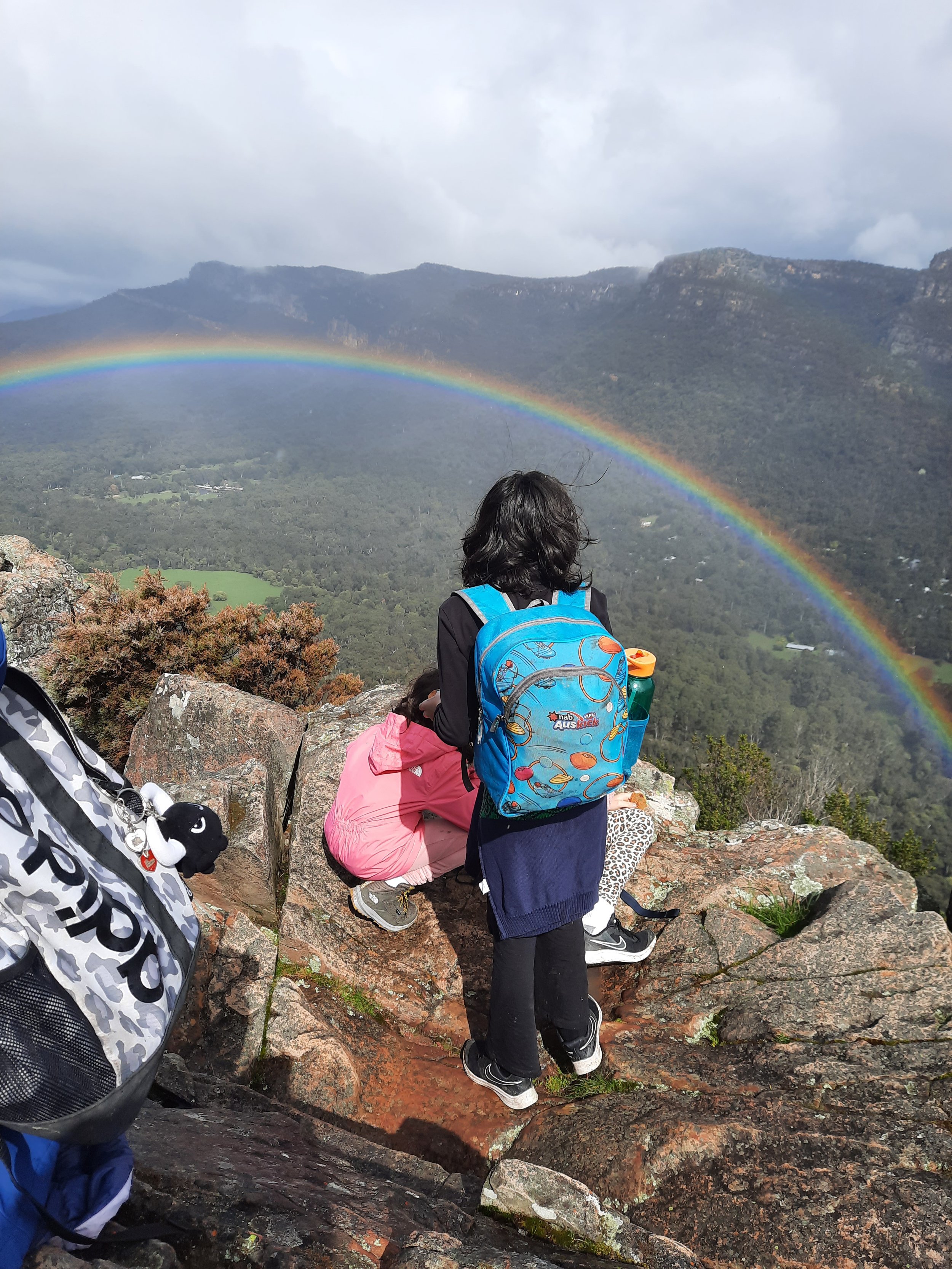
Outings are a treasured and important element of the FCS experience, and happen several times a week. Many of our outings take place along Merri Creek, the Yarra River and Darebin Parklands. We are fortunate to have many beautiful bush settings close to both campuses. Outings though are not restricted to nature settings, we regularly visit galleries, museums and the range of cultural sites. These adventures are undertaken on trams, train, bus and on foot.
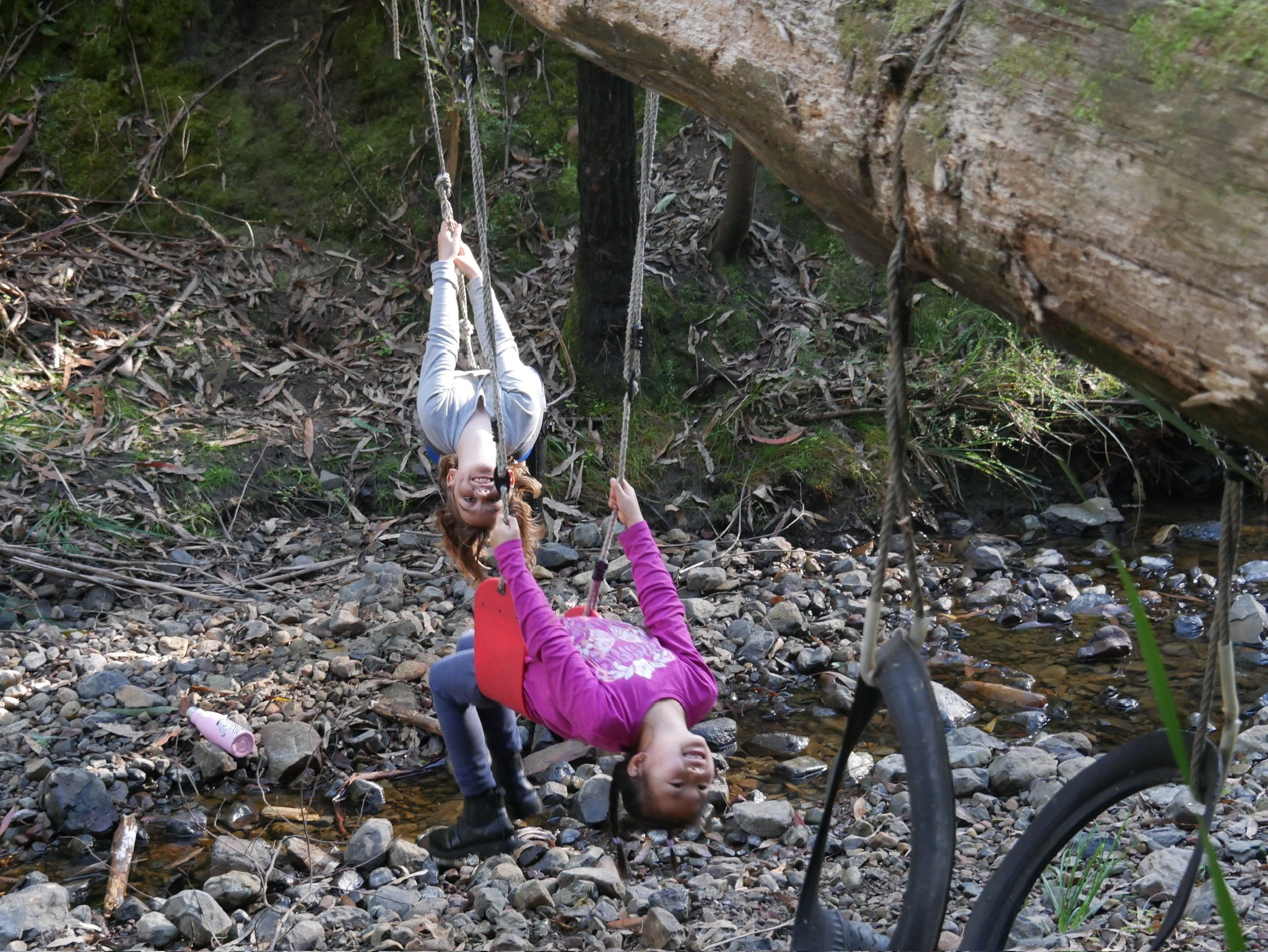
Part of the joy of outings is the element of the unknown… we never fully know what is in-store: who we may meet and the experiences we may have. It is striking how groups will spend their time quite differently in the same locations, so even the ‘same’ outing can feel quite different. The ‘structure’ of the adventure is provided by the adult leading the group; the destination and activity. Within that structure, there is significant flexibility and freedom for the children to choose how they will engage with the location (and each other). The children speak of outings in terms of freedom. Outings include the premise that when we come across something interesting we stop and explore: an unfamiliar path, a creek crossing, a large number of insects, a friendly dog, a rope swing, autumn leaves, a musical performance, a playground… the list is endless!
The creativity and abundant energy of children are continually seen on outings. Exploration, climbing and creative, dramatic play are common features. Cubby houses are collaboratively constructed from sticks, leaves, flowers and branches. In some places, children are able to run freely and find joy in this. Outings are generally a satisfying physical endeavour, we return to school feeling happily tired.
Learning occurs naturally during outings because of the real-world context, enhanced by the time given to child-led activities. Outings embed a ‘hands-off’ approach. This should not be understood as behaviour and safety expectations being downgraded, the opposite is in fact the case. It is simply impossible to give poorly behaved children the freedom experienced on outings. The teacher’s role is nuanced, at times, taking full control, at times, stepping back to observe and allow the children to engage in constructive experiences of their own devising. Our experience is that the children naturally engage in constructive activities of their own choosing, with minimal adult direction.
The provision of unstructured time in real-world settings cannot help but to create opportunities for powerful teachable moments. Children may understand theoretically what is involved in being a good friend, being helpful, kind and thoughtful, considering other people’s needs, trying their best, making compromises or managing negotiations. Outings provide valuable opportunities to practise and develop these skills under the guidance of their teacher. Our ongoing observation is that outings provide a space for the older children to actively care for younger ones.
Outings provide time in nature, time to play, opportunities to explore, wonder and learn as well as well as a time to connect with friends through shared, joyful experiences.
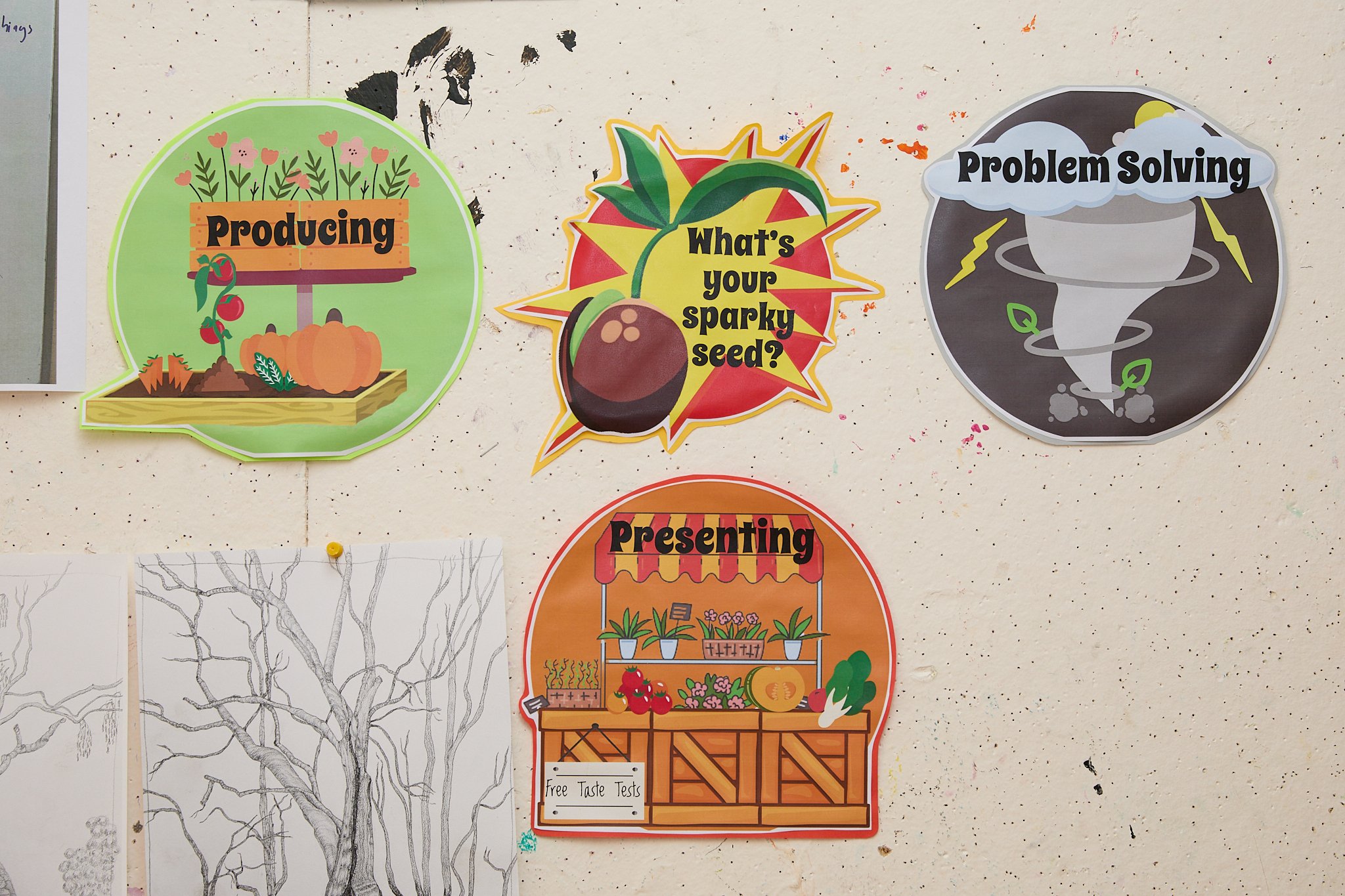
Passion Projects provides students with an opportunity to combine an interest or curiosity into a term-long sequence of guided tasks culminating in an exhibition where the projects are shared and explained.
Each term-long project builds upon the last, providing student agency at different points along the journey. Students:
1. Choose what the end product will be
2. Decide on the initial idea of a project
3. Create an empathetic solution within the constraints of a design brief
4. Spearhead an entrepreneurial project
As students engage at these points, they gain a growing sense of ownership over the outcome (and their learning) while experiencing the motivation associated with creating, owning and developing a project. Entrepreneurial skills: critical thinking, analysis, creative thinking, problem solving, idea generation, testing of hypotheses, teamwork, and communication and presentation skills are an integral part of Passion Projects.
The Passion Projects framework has been developed to provide students with trusted points of reference throughout a project. Concepts are explicitly taught and regularly revisited. Real, authentic situations are used as examples to reinforce concepts.
The idea is student initiated and comes from a place of personal passion, curiosity or interest.
The student assesses what action(s) they need to take in order to progress through a project.
The student explores similar materials (or concepts) to develop the project.
Students will face numerous challenges and problems requiring solutions. The development of an idea into a concrete set of tasks culmination in a realised outcome necessarily requires problem solving and as such is an authentic learning experience.
At this stage the students have defined their final product, sourced their materials and actioned the tasks required to produce the end result.
The projects are showcased, explained and discussed, with the students sharing their journeys. Parents and teachers are regular attendees at these presentations.
The school enjoys a very high level of academic achievement. This success is a by-product of the curriculum and a concentration on communication skills and self-confidence.
FCS students receive personalised, attentive learning, ensuring that competency is achieved across the curriculum.
The children who join our school part-way through their primary years are almost without exception at a lower standard, and some are unable to read the easiest words or complete simple additions. We are saddened when we gain a student who after three years at school cannot count to 20 or spell the simplest three-letter word.
While this is not to state that FCS achieves an outstanding level with all students, our small classes, and able, dedicated teachers have most students one-to-two years ahead of their peers in mainstream schooling by the end of primary school.
The link below shares articles on the style of schooling, our values, educational philosophy and a snapshot on the origins of our school.
The link below provides access to the FCS policy and compliance documentation.