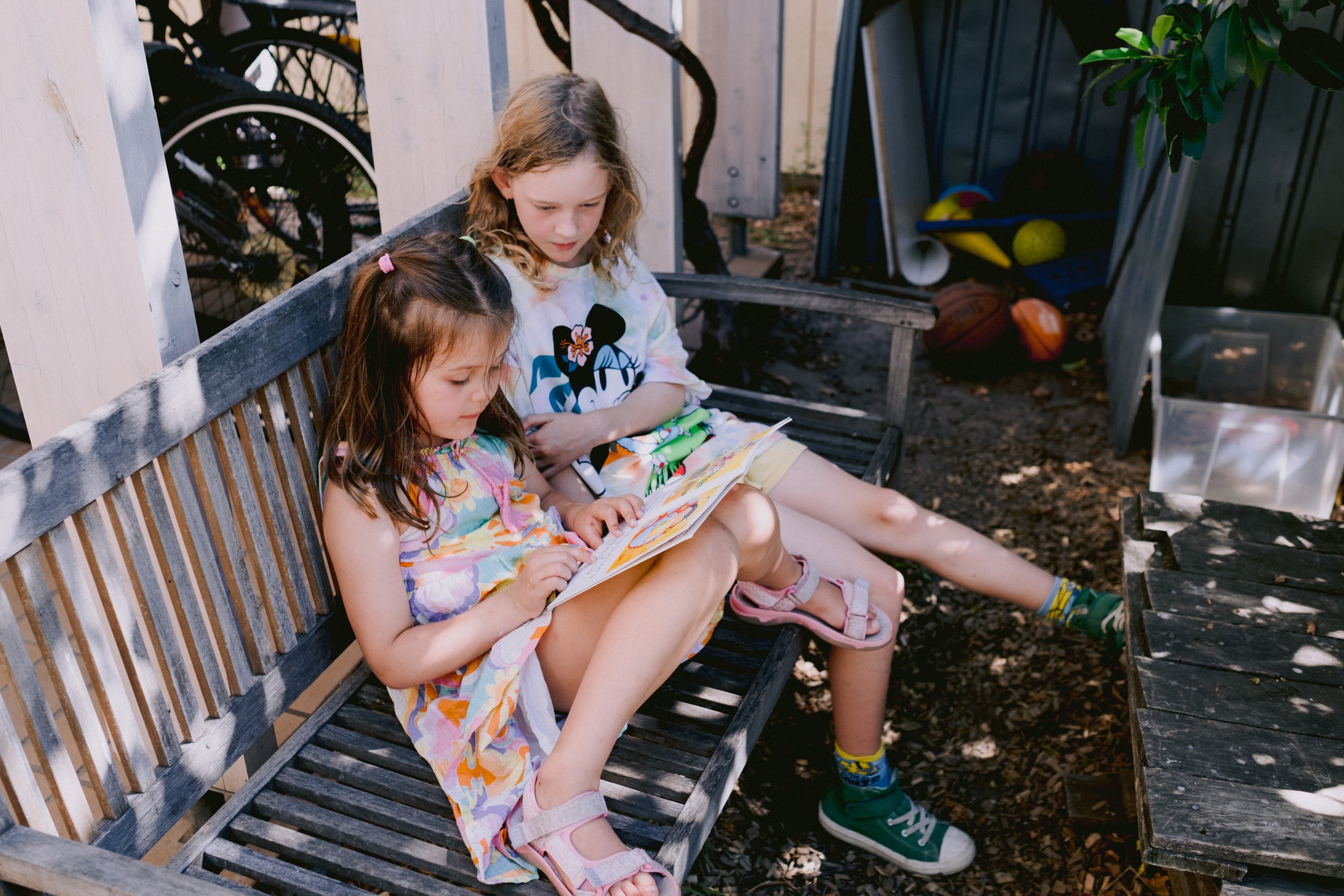
Freetime is a regular feature on the timetable. Freetime is the time when our children decide for themselves what they want to do and how they will do it. The first part of this, deciding for themselves what they’d like to do is only a real choice when they are not restricted to selecting from a predetermined list. Choosing from a list of electives is qualitatively different to choosing unrestrictedly.
In this, no claim is being made that that the scheduling of activities should be avoided. And neither is it being asserted that there are no activities that will be of benefit to children. The point is that freetime is different. In freetime the child chooses for themselves what they want to do, without prompt or restriction. In this, doing 'nothing' is as valuable as anything else if it is the child's choice.
FCS sees significant benefit in the child discovering what they like – what they want to do. This is a personal journey in which the child learns what appeals to and engages them. This is an important discovery as it underpins not just our motivations, but also whether (or not) we find meaning in our activities and pursuits. It is not uncommon for the child who joins our school a few years into their primary school journey to, on their initial encounter with freetime, declare that ‘I don’t know what to do’ and when gently prompted by a teacher that they can do whatever the like, to state that ‘I don’t know what I like’. This is a disempowered, worrisome person, as a person who has not discovered this for themselves would appear to be a candidate for manipulation.
Freetime provides a space where the child is able to discover, explore and evaluate what they like and dislike. FCS is aware that a failure to identify what is personally meaningful contributes to a future in which employment / projects may feel hollow.
Academic and technical excellence are likely to fade into irrelevance if we are unaware as to the reasons why we have pursued them. Degrees and jobs will fail to provide fulfillment if we don’t gain meaningful enjoyment in them. Unless we are in touch with what moves us, our day-to-day evolves into a progression of other-determined tasks. Meaning and fulfilment are found when there is a reason or purpose behind what we do.
Freetime is an age-appropriate means by which FCS helps its students to discover their likes and motivations. In our children’s busy world crammed full of activities: ballet, basketball, swimming, drawing, writing, yoga, violin, pottery, French, etc, and the prevalence of screens, freetime provides a small gap to dream and discover.
Freetime also provides an opportunity for children to learn how to play appropriately with each other. Appropriate here meaning in a manner that leads to a positive experience for all, a good measure of which is whether other children wish to play with them again. Simply, is the child playing in a way that other children?
That is, when a child plays, the manner of their play determines whether they are someone other children want to play with. Freetime allows a child an opportunity to discover, reflect upon and revise which actions and demeanour are attractive to others. Conversely, certain actions and mannerisms will come across as less appealing to others, and so generate resistance and pushback. The negative response similarly creates an opportunity for the child to re-assess and vanquish their less appealing traits.
FCS’s commitment to raising socially engaged, happy children is moreover buttressed through the opportunities freetime allows the teachers to observe and provide feedback to the children. specifically on how their style of play is experienced by. That is, freetime affords an opportunity to observe a child’s manner or style of play, and to flag those aspects that are un-appealing and off-putting. Conversely, there is also an opportunity to highlight approaches that enhance their appeal to others. Freetime, unlike lunchtime typically involves 10 or so children, and so allows an intimate opportunity to gain a real insight into the way in which children play.
Non-structured, suggestion free space similarly allows for caring interactions and creative exploits to bloom, while similarly providing room in which the art of negotiation and the skill of compromise may be practiced. Kindness and care flourish during freetime, especially when it involves a mixed-age group. These times typically see the older children happily involved in games and looking after the younger ones. In a similar vein, helpfulness finds an opportunity to be exhibited during freetime.
A well-managed classroom provides scant opportunities for children to reflect upon the manner in which their behavior is received by others, due to the responsibility for the class residing with the teacher. It is during the unstructured parts of the day that an opportunity to explore who one is and how one is perceived by exists. Freetime as such plays a pivotal role in self-discover and the emergence and sustenance of a happy and inclusive school culture.
Our approach is to jump into the many experiences offered in our large city and beyond its borders. There are many outings and camps in a year in which a positive spirit of initiative and fun are encouraged.
The approach taken by our school is often described by the many education academics who visit us as adventurous. We think that this is an apt description, and are proud to be described as adventurous. The modern school environment is, sadly, often best described as restricted and timid. The lack of confidence and anxiety so prevalent in many young people is built and reinforced by the restrictions and worries placed upon them. In aiming to raise confident, empowered young people, an adventurous outlook immersed in actual adventures is imperative.
Our long walks in nature, climbing of trees and active engagement with the outside world give the children a sense of their own ability, which is the strongest pillar upon which confidence can be built.
The modern world is big on addressing children in a positive, boosting-of-ego manner. It is common to tell children how good or able or successful they are… while simultaneously denying them any real opportunity to attempt a task or participate in an activity. They are told how smart and able they are… but not allowed to walk to the local shop or get the tram 4 stops to school. In this, ultimately, the restrictions we place on our children carry far greater weight than our words. In our denying children the opportunity to tackle activities:
1) they slowly come to see themselves as people we don’t trust; or
2) people we don’t have much confidence in; or
3) people we don’t actually think are very able.
Our school recognises that this constant, ongoing denial of the opportunity to act for oneself and by oneself diminishes children. It is our understanding that schooling/education should be an expansive endeavour, we embrace adventure and the uplifiting of spirits that the completion of challenges endows.
This is not to say that some children find being away from Mum and Dad for a night or two (the first time) a bit of a challenge. Or that dancing or singing or recitation in front of an audience can be more than a bit frightening. Confidence is grown through overcoming nerves, of still going on despite small anxieties. We don’t deny that being away on camp at six for two nights is a bit scary for some children… but neither do we belive that keeping them home actually helps them in the long run. We offer comfort to children who are a bit worried, but always from the position that they are more than able to spend a night away from Mum or Dad. We acknowledge that many of us do feel confronted by the prospect of singing in front of an audience, but we believe such feelings of worry are not grounds for throwing in the towel. Our experience is that our programs, delivered by supporting and caring staff, have (for nearly 50 years) led to flourishing children who are happy, confident, engaged and connect.
Our experience informs our understanding that the conquering of small hurdles during childhood builds the ability to conquer increasingly larger and larger challenges as we get older.
There is no "in" ideology within the school. We have families of various beliefs and lifestyles. We value this variety and believe that exposure to this variety benefits all our children.
At the heart of our school life is the sense of community, or extended family. This sense of connectedness, demonstrated in a felt trust and real sense of belonging, plays a significant role in not just making school a place that they want to spend time in, but also a place of academic enrichment.
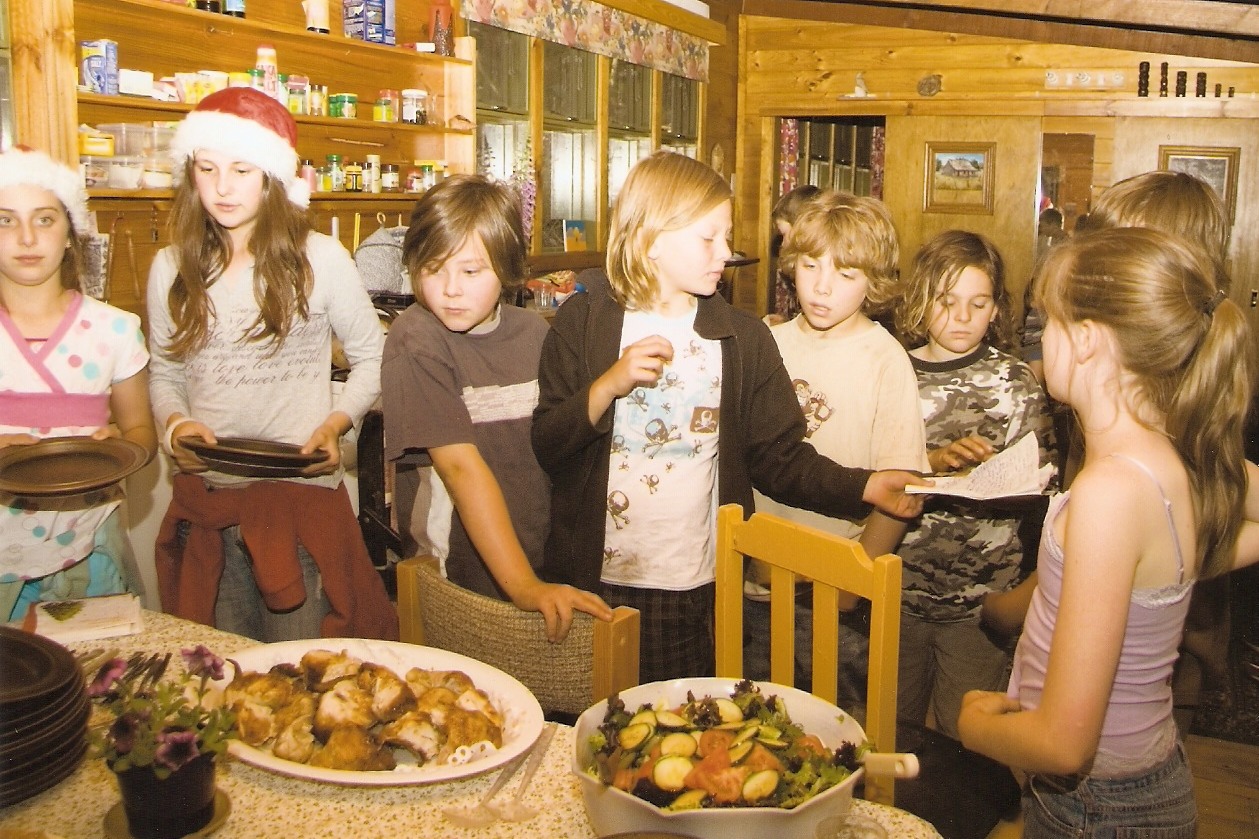
Eating together plays a significant role in connectedness. Sharing a meal is an age-old human tradition, a tradition that we all know helps to build and sustain friendships. Company is shared along with the food.
At FCS, we eat together much like a family does. That’s why the children don’t bring lunches. The decision to make food a shared activity, rather than eating from individuals tuckboxes, is an aspect of our daily routine aimed at fostering and enhancing community.
If a child has a special medical need, we understand and accept that certain foods may need to be eliminated or conversely prioritised. This said, while we respect parents’ rights to teach their own child what to eat, we do ask adults not to lecture or make food a divisive issue within the school.