Freetime
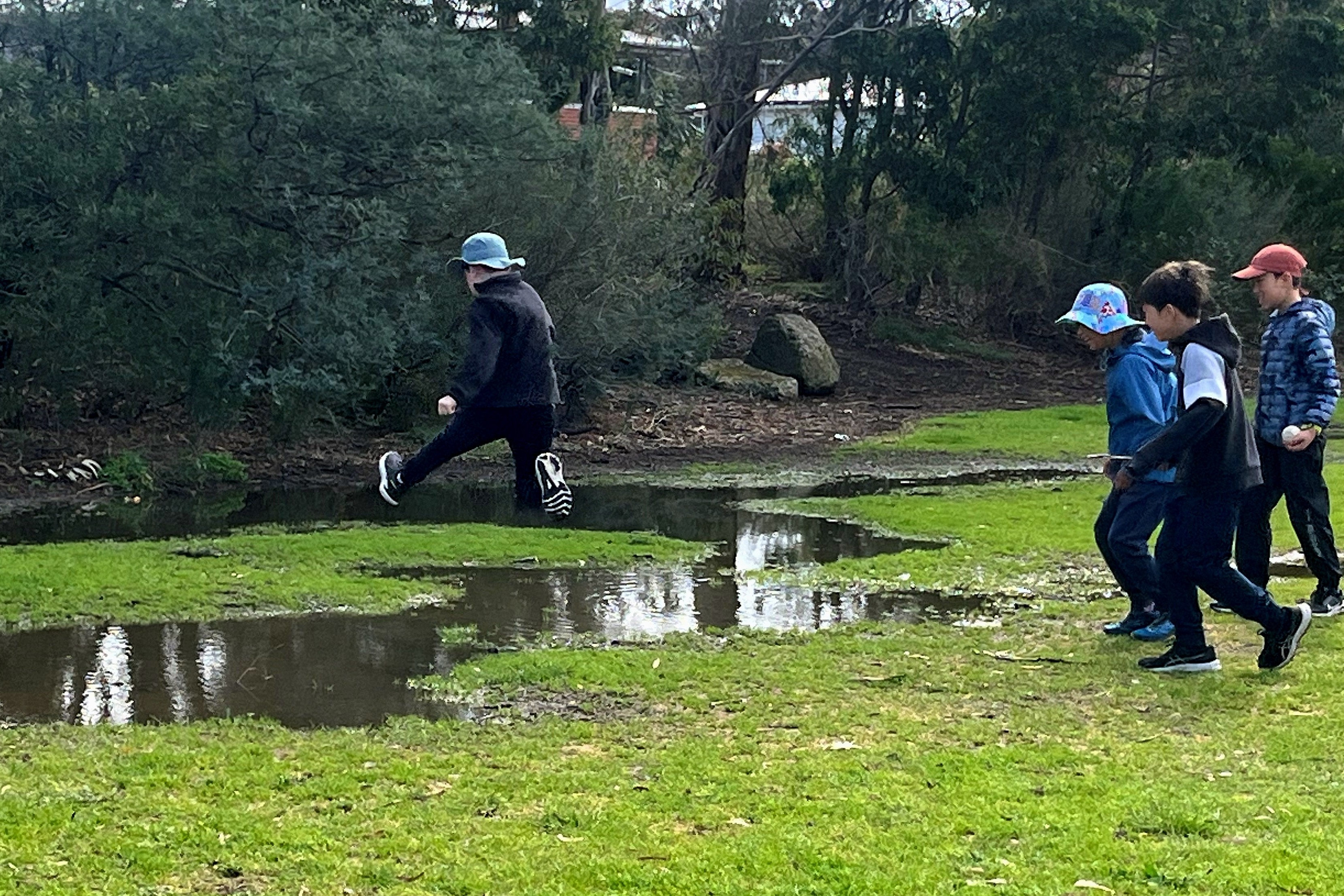
Freetime is a regular feature on the timetable. Freetime is the time when our children decide for themselves what they want to do and how they will do it. The first part of this, deciding for themselves what they’d like to do is only a real choice when they are not restricted to selecting from a predetermined list. Choosing from a list of electives is qualitatively different to choosing unrestrictedly.
In this, no claim is being made that that the scheduling of activities should be avoided. And neither is it being asserted that there are no activities that will be of benefit to children. The point is that freetime is different. In freetime the child chooses for themselves what they want to do, without prompt or restriction. In this, doing 'nothing' is as valuable as anything else if it is the child's choice.
FCS sees significant benefit in the child discovering what they like – what they want to do. This is a personal journey in which the child learns what appeals to and engages them. This is an important discovery as it underpins not just our motivations, but also whether (or not) we find meaning in our activities and pursuits. It is not uncommon for the child who joins our school a few years into their primary school journey to, on their initial encounter with freetime, declare that ‘I don’t know what to do’ and when gently prompted by a teacher that they can do whatever the like, to state that ‘I don’t know what I like’. This is a disempowered, worrisome person, as a person who has not discovered this for themselves would appear to be a candidate for manipulation.
Freetime provides a space where the child is able to discover, explore and evaluate what they like and dislike. FCS is aware that a failure to identify what is personally meaningful contributes to a future in which employment / projects may feel hollow.
Academic and technical excellence are likely to fade into irrelevance if we are unaware as to the reasons why we have pursued them. Degrees and jobs will fail to provide fulfillment if we don’t gain meaningful enjoyment in them. Unless we are in touch with what moves us, our day-to-day evolves into a progression of other-determined tasks. Meaning and fulfilment are found when there is a reason or purpose behind what we do.
Freetime is an age-appropriate means by which FCS helps its students to discover their likes and motivations. In our children’s busy world crammed full of activities: ballet, basketball, swimming, drawing, writing, yoga, violin, pottery, French, etc, and the prevalence of screens, freetime provides a small gap to dream and discover.
Freetime also provides an opportunity for children to learn how to play appropriately with each other. Appropriate here meaning in a manner that leads to a positive experience for all, a good measure of which is whether other children wish to play with them again. Simply, is the child playing in a way that other children?
That is, when a child plays, the manner of their play determines whether they are someone other children want to play with. Freetime allows a child an opportunity to discover, reflect upon and revise which actions and demeanour are attractive to others. Conversely, certain actions and mannerisms will come across as less appealing to others, and so generate resistance and pushback. The negative response similarly creates an opportunity for the child to re-assess and vanquish their less appealing traits.
FCS’s commitment to raising socially engaged, happy children is moreover buttressed through the opportunities freetime allows the teachers to observe and provide feedback to the children. specifically on how their style of play is experienced by. That is, freetime affords an opportunity to observe a child’s manner or style of play, and to flag those aspects that are un-appealing and off-putting. Conversely, there is also an opportunity to highlight approaches that enhance their appeal to others. Freetime, unlike lunchtime typically involves 10 or so children, and so allows an intimate opportunity to gain a real insight into the way in which children play.
Non-structured, suggestion free space similarly allows for caring interactions and creative exploits to bloom, while similarly providing room in which the art of negotiation and the skill of compromise may be practiced. Kindness and care flourish during freetime, especially when it involves a mixed-age group. These times typically see the older children happily involved in games and looking after the younger ones. In a similar vein, helpfulness finds an opportunity to be exhibited during freetime.
A well-managed classroom provides scant opportunities for children to reflect upon the manner in which their behavior is received by others, due to the responsibility for the class residing with the teacher. It is during the unstructured parts of the day that an opportunity to explore who one is and how one is perceived by exists. Freetime as such plays a pivotal role in self-discover and the emergence and sustenance of a happy and inclusive school culture.